Range & Distribution
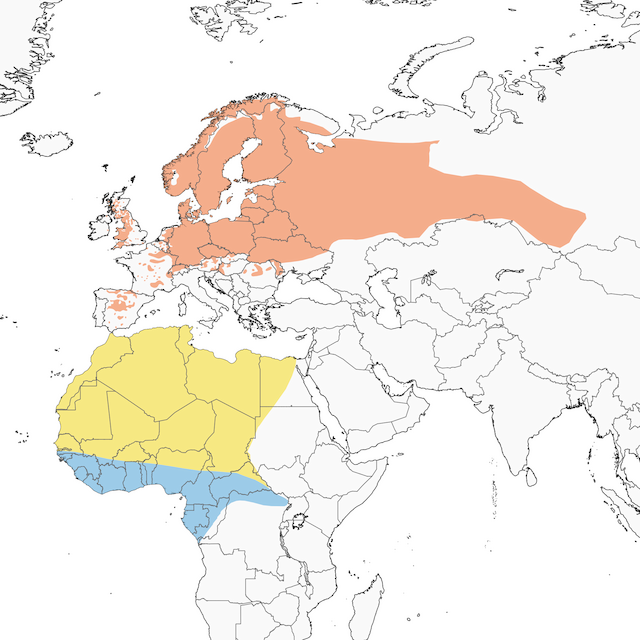
Breeding
Nonbreeding
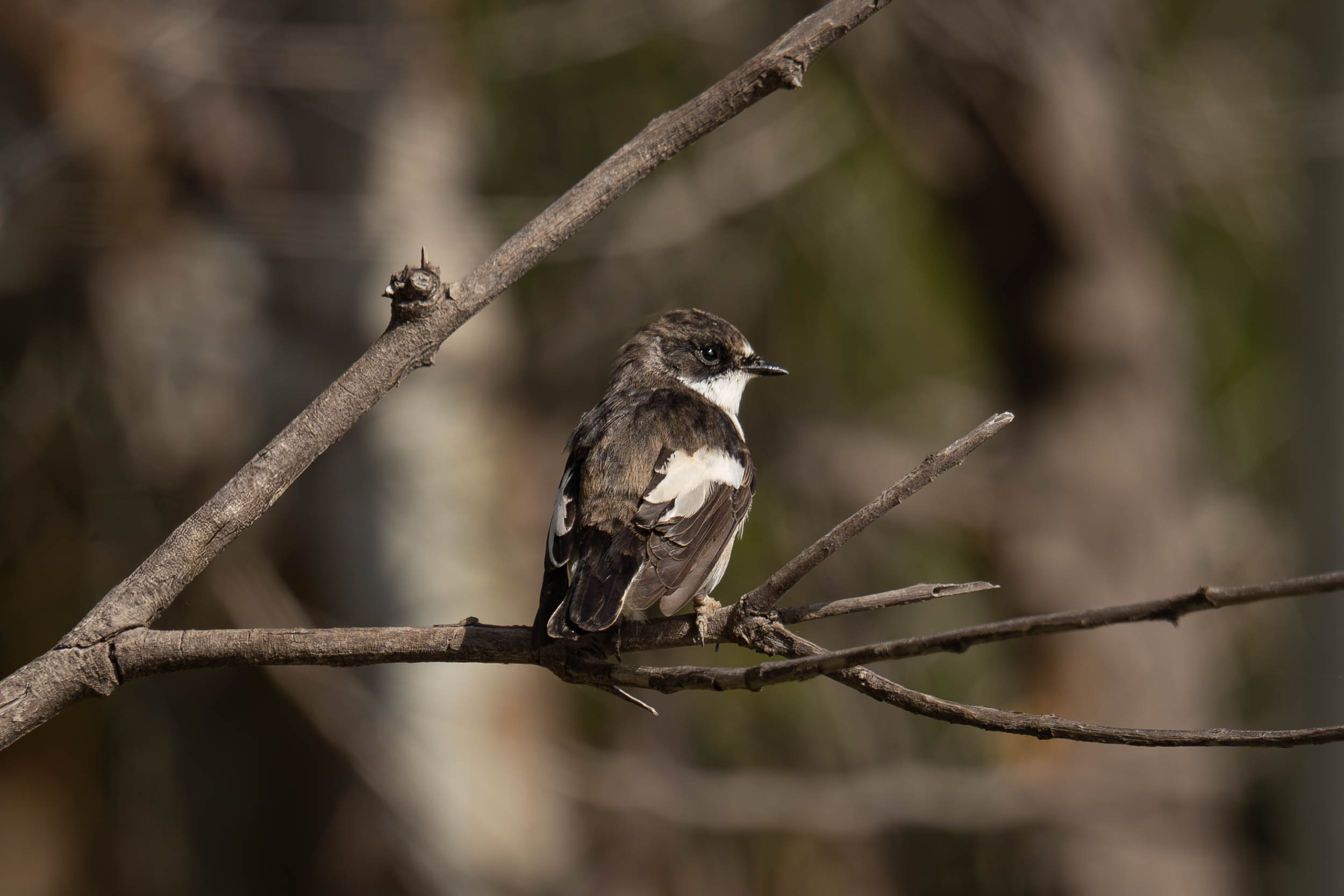
The male European Pied Flycatcher in breeding plumage is a striking small bird — clean black above and white below, with a bold white wing patch and small white forehead patch. Females are brown where the male is black but share the white wing pattern. The plumage is crisp and graphic, photographing well even in relatively flat light due to the high contrast.
An insect-catching specialist, the bird hunts in two modes: aerial sallying from an exposed perch, taking flying insects in short pursuit flights before returning to the same perch; and gleaning insects from leaves and bark in the canopy. In spring on the breeding grounds, males sing persistently from perches near potential nest holes, and competition for prime cavities can be fierce.
Migration stopovers in spring and autumn can bring good numbers through suitable woodland habitats, particularly in coastal scrub and woodland where migrants concentrate. Nest box schemes in managed woodland attract breeding pairs and give reliable access to nesting adults at known locations — one of the most effective ways to photograph this species at close range.
Despite being listed as Least Concern globally, the European Pied Flycatcher has shown significant population declines across much of its European breeding range. The cause is a well-documented phenological mismatch — spring migration timing has not kept pace with advancing leaf burst and insect emergence driven by climate warming, meaning birds arrive after the peak of their caterpillar prey. This mismatch is considered one of the clearest documented examples of climate change-driven population decline in a migratory songbird.