Range & Distribution
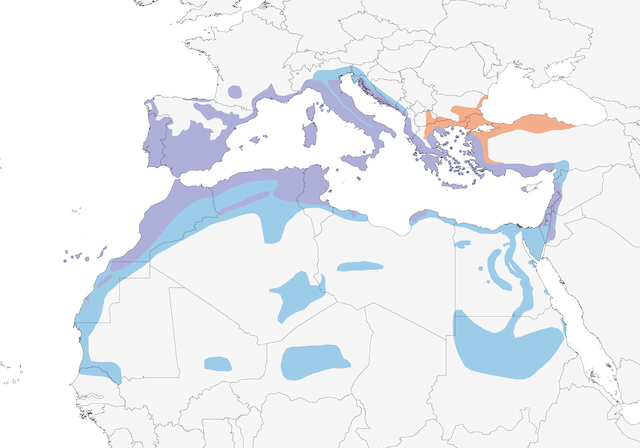
Year-round
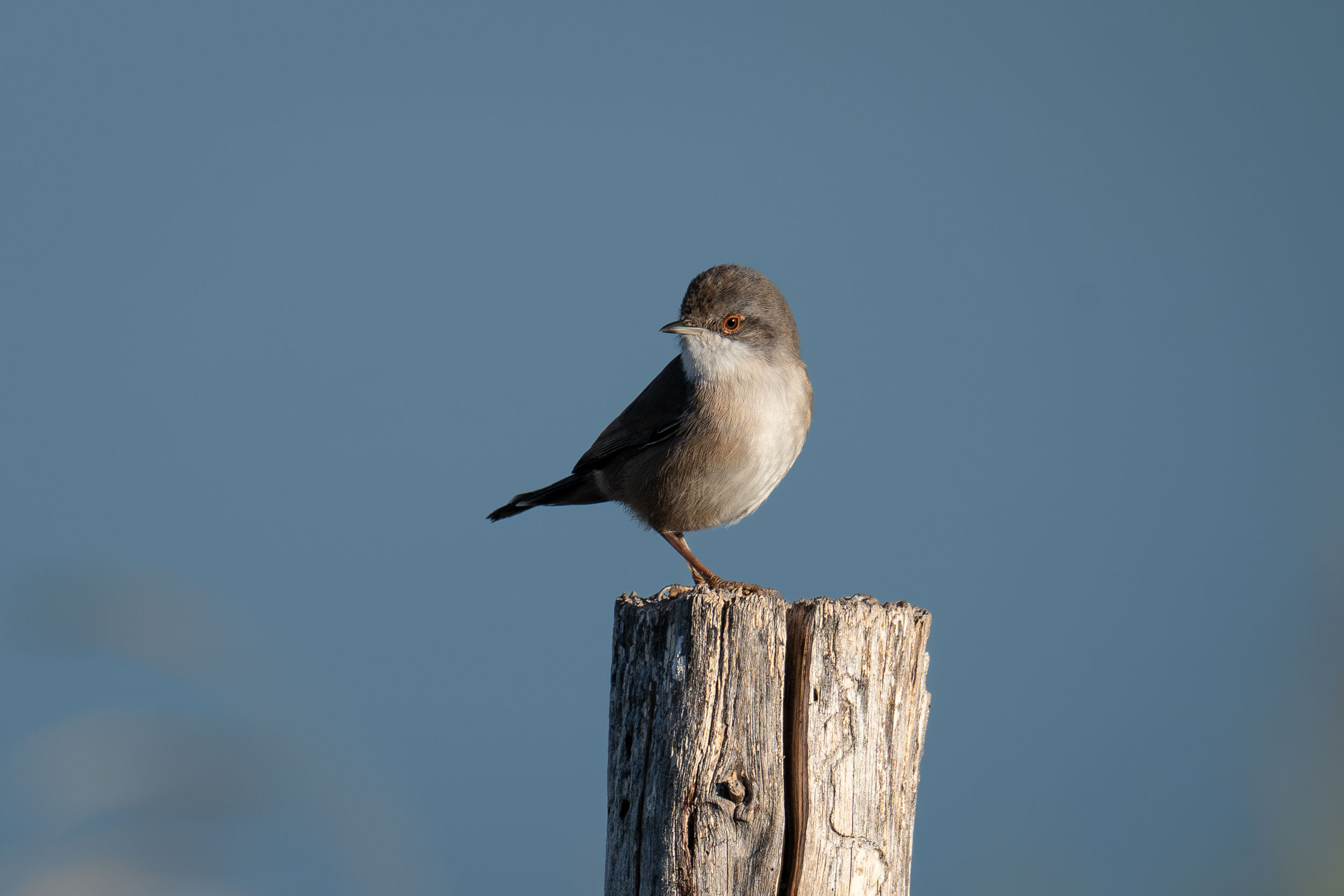
The Sardinian Warbler is a characteristic bird of Mediterranean scrubland — the maquis and garrigue habitats of the Mediterranean basin where dense, aromatic shrubs like rosemary, cistus, and lentisk create an almost impenetrable low canopy. The male's black hood contrasting with grey upperparts and white underparts, combined with a distinctive red eye ring, makes it one of the more sharply marked warblers in the region.
Like many warblers, the Sardinian can be heard far more easily than it is seen. The scolding, rattling alarm call — a harsh chek-chek repeated persistently — betrays the presence of a bird deep in the scrub, and patience at the edge of suitable habitat often eventually produces brief views as the bird pops to an exposed perch before retreating again.
Singing males in spring, delivering the scratchy, rapid warble from exposed bush tops or during brief song flights, offer the most consistent photographic access. The red eye ring photographs particularly well in close images that reveal the contrast with the black hood. Scrubby coastal headlands and hillsides in Sicily, southern Spain, and the southern French coast are reliable locations.
Common and widespread across the Mediterranean basin, the Sardinian Warbler faces no conservation concerns. The species has benefited from the expansion of shrubby vegetation following agricultural abandonment in parts of southern Europe, and populations are stable to increasing across most of the range.