Range & Distribution
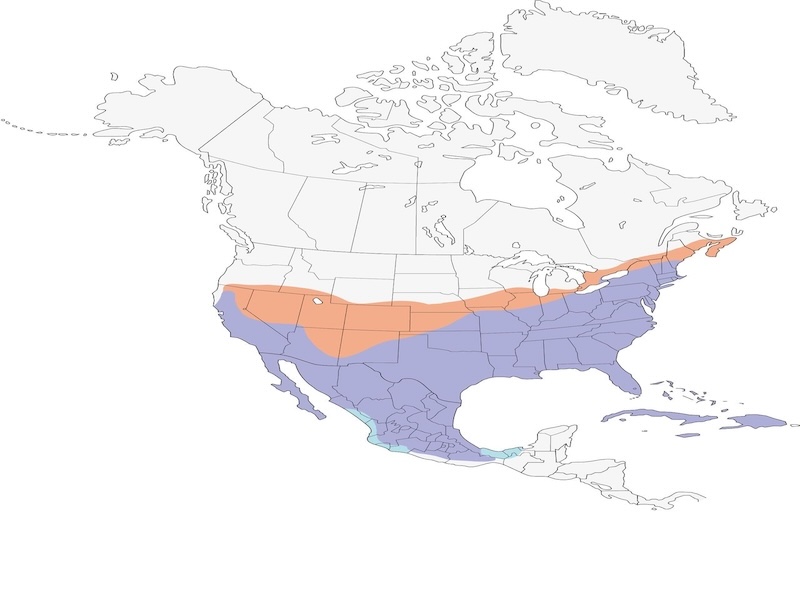
Year-round
The Northern Mockingbird is the preeminent vocal mimic of North America, capable of learning and incorporating the songs and calls of dozens of other species into an endlessly varied and improvised repertoire. A single male may sing over 200 different song types. The song is delivered persistently through the day and — in spring and in areas with artificial nighttime lighting — throughout the night as well.
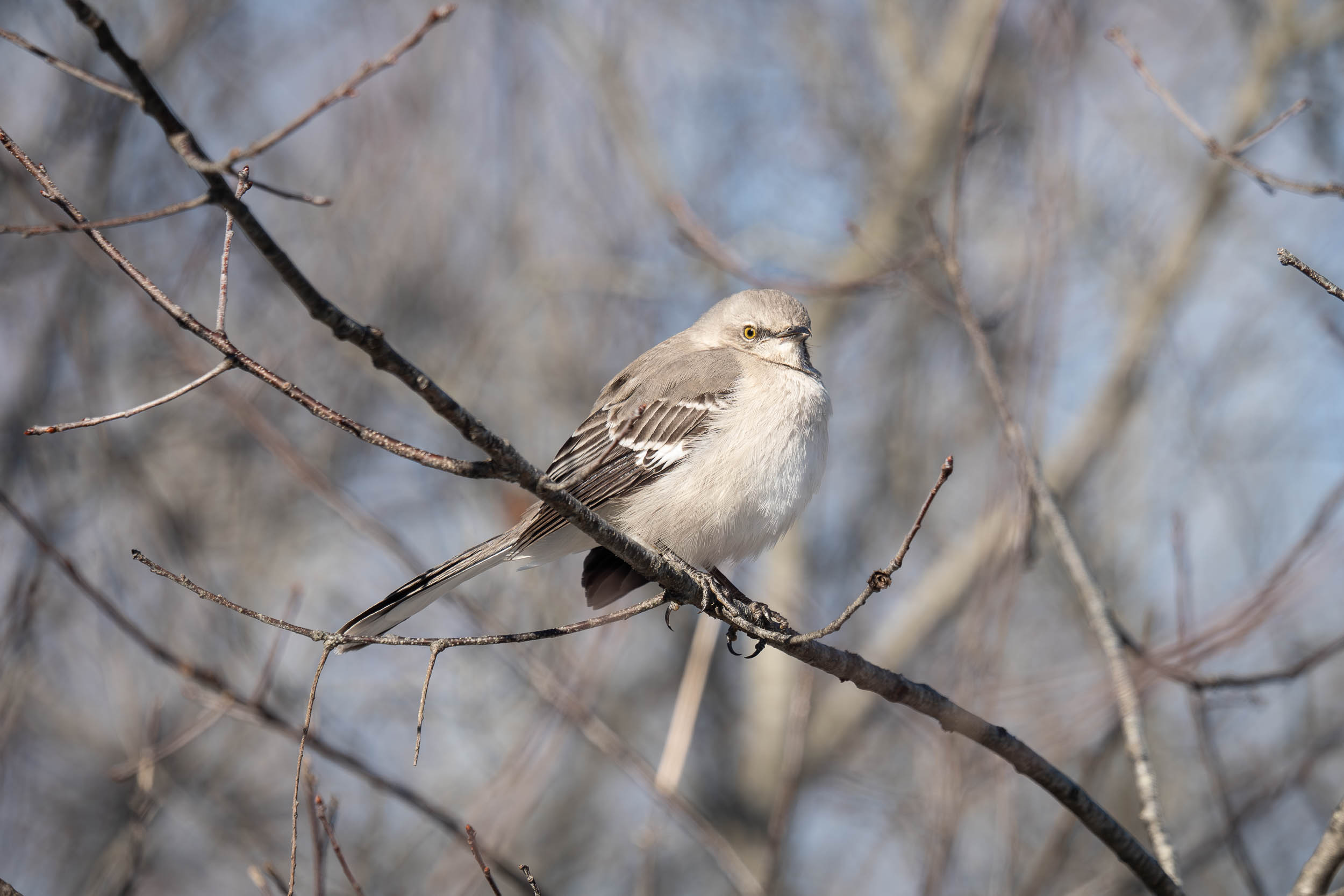
In plumage the mockingbird is subdued — grey above, whitish below, with distinctive white wing bars and white outer tail feathers that flash conspicuously in the wing-flashing display used during territorial confrontations and possibly prey flushing. The behavior of spreading and lowering the wings in a slow, deliberate display posture while walking on lawns or open ground is characteristic and often puzzling to observers unfamiliar with the species.
Mockingbirds are territorial year-round, holding and actively defending winter feeding territories in addition to summer breeding territories. The persistence of individual birds at known sites, combined with their tendency to sing from exposed perches, makes them one of the more reliably locatable subjects for sustained field photography.
Common, widespread, and adaptable, the Northern Mockingbird is under no significant conservation pressure. The species has extended its range northward over the past century, benefiting from the expansion of suburban environments offering suitable habitat and fruit-bearing ornamental plants. It is the state bird of five US states.