Range & Distribution
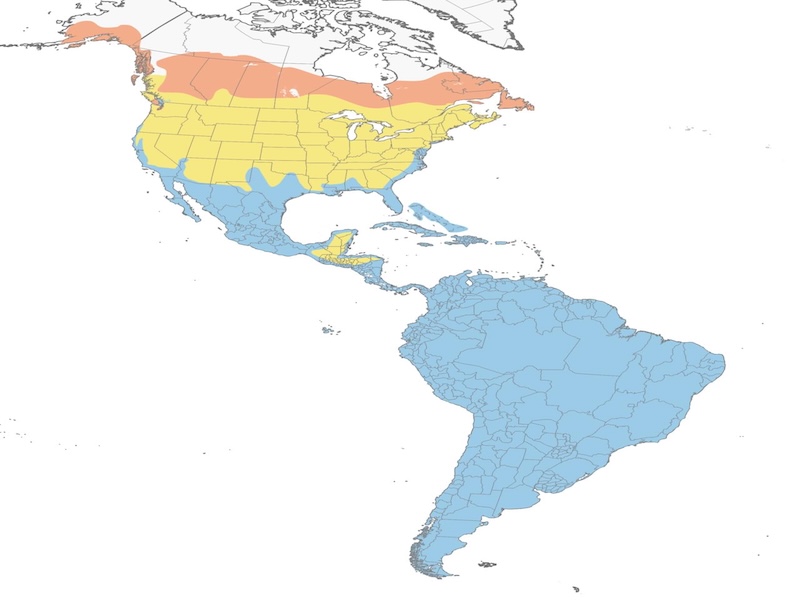
Breeding
Nonbreeding
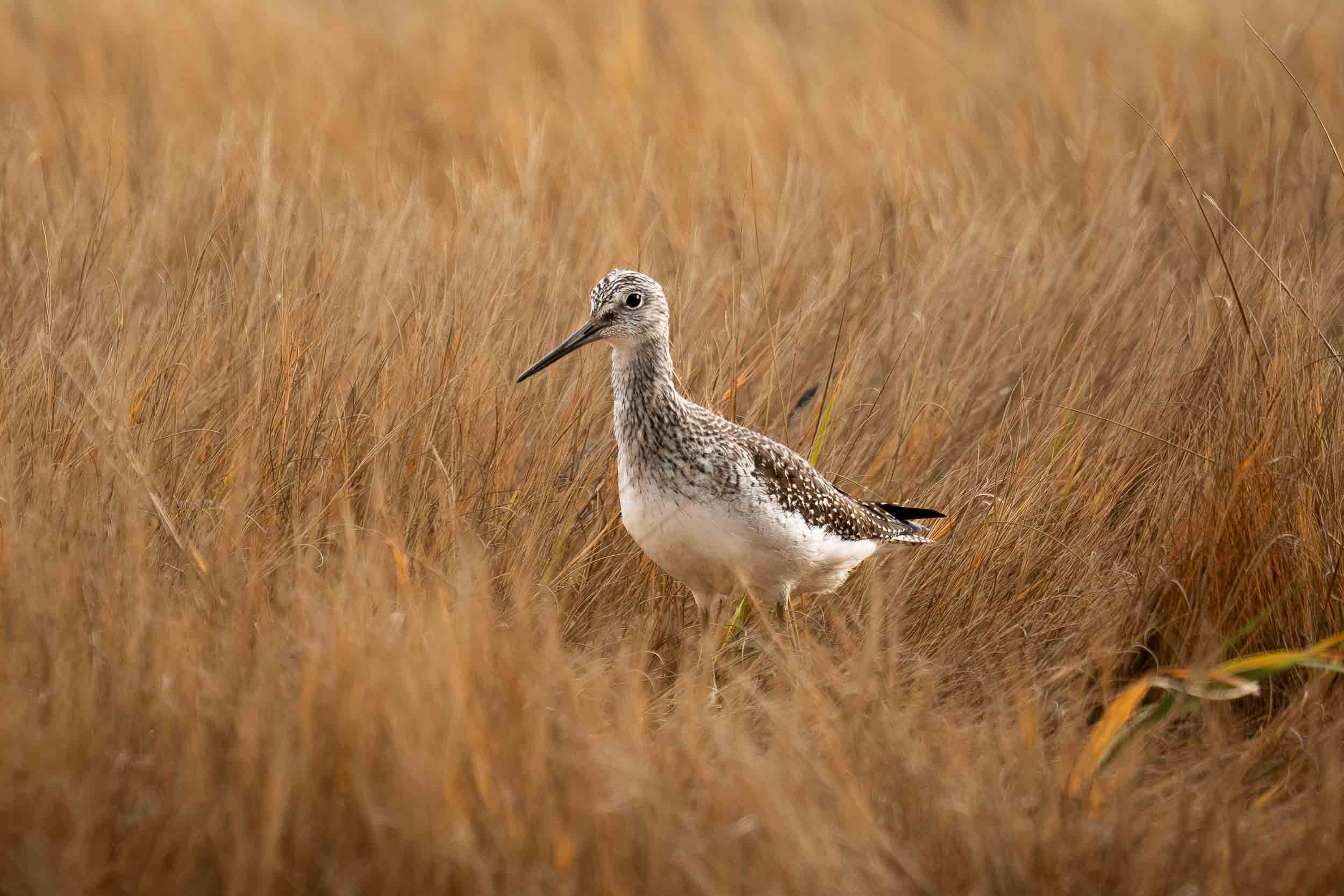
The Greater Yellowlegs is a large, long-legged sandpiper best known in North America during migration, when it appears at a wide variety of wetland habitats. The distinctive loud three-note call — a descending series of clear whistles — is often the first indication of the bird's presence. Bright yellow legs, a long slightly upturned bill, and strongly spotted and barred plumage in breeding condition are the defining field marks.
The closely related Lesser Yellowlegs is a consistent identification challenge, particularly for newer observers. The Greater is noticeably larger, with a longer bill that appears distinctly upturned at the tip rather than straight. The call is the most reliable separator in the field — the Greater's is louder, more emphatic, and typically three syllables, while the Lesser tends toward one or two.
Shallow water edges at migration stopovers, where the bird actively forages by sweeping its bill through the water or chasing small fish, offer the best opportunities. The bird often wades deeply — sometimes up to its belly — to pursue prey, and the yellow legs are frequently submerged. Shore-level angles from the water's edge, low in the vegetation, eliminate distracting backgrounds and emphasize the bird's clean profile.
The Greater Yellowlegs is currently stable and under no significant conservation pressure, though it breeds in remote boreal habitats that are difficult to survey and where population data are less robust than for many species. Migration periods — when birds concentrate at coastal and inland wetlands — are the best times to assess relative abundance. As a long-distance migrant, the species is potentially sensitive to changes in stopover habitat quality along migration corridors.