Range & Distribution
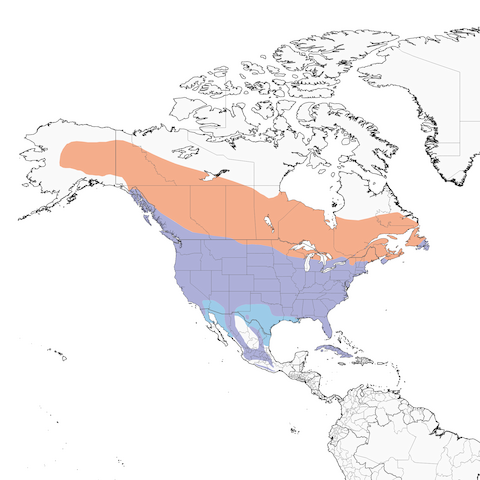
Year-round
Breeding
Nonbreeding
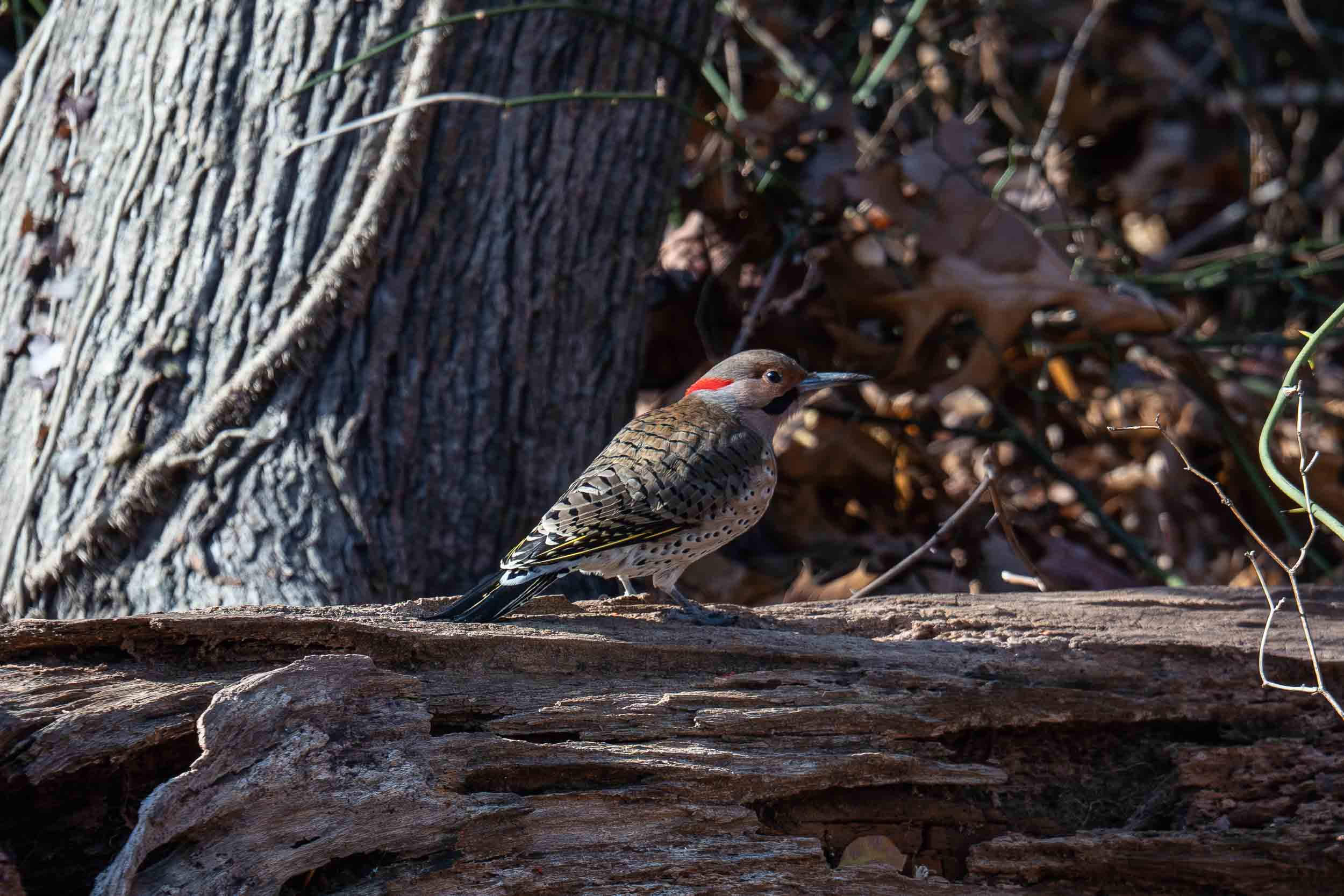
The Northern Flicker is a large brown woodpecker that spends much of its time on the ground. The back is closely barred black on brown, the buff underparts are boldly black-spotted, and a black crescent sits across the breast; in flight a white rump flashes conspicuously. Eastern birds — including those in Maine — are the “Yellow-shafted” form, showing lemon-yellow shafts in the wings and tail, a grey crown with a red crescent on the nape, and, on males, a black malar stripe. The bird shown here is a yellow-shafted flicker.
Unusually for a woodpecker, the flicker forages mainly on the ground, hopping across lawns and open soil to probe for ants and beetles, which make up the bulk of its diet; in fall and winter it turns more to fruits and seeds. It excavates a fresh nest cavity in a dead or rotting trunk most years, and abandoned flicker holes become nest sites for a long list of other cavity nesters. Spring birds drum and call loudly to hold territory, and fly in a deep, undulating bound.
In Maine the Yellow-shafted Flicker is a common breeder from spring through fall, conspicuous on lawns, woodland edges and recently opened ground, with most birds withdrawing south for winter. Because flickers feed on the ground, a low approach pays off — get the camera down to their level for clean eye-line frames against grass rather than shooting down at them. Watch for the white rump and yellow underwing as a perched bird flushes, and work the warm, low light of early morning when birds feed in the open.
The Northern Flicker is listed as Least Concern and remains widespread, but long-term surveys show a steady decline since the 1960s across much of the continent. Part of the pressure comes from competition for nest cavities with introduced European Starlings, which readily evict flickers from freshly excavated holes, and part from the tidy removal of the dead and dying trees the species needs to nest. Leaving standing snags in woodlots and yards is the simplest thing that helps.