Range & Distribution
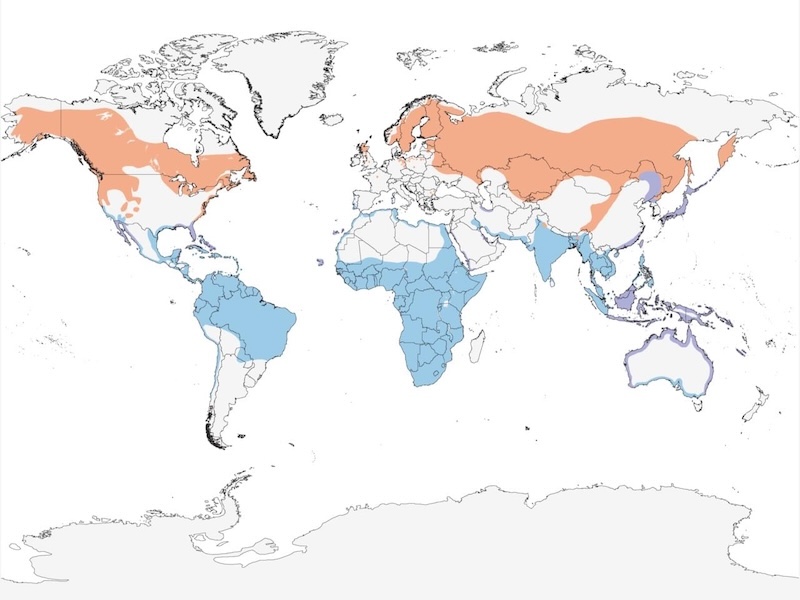
Year-round
Breeding
Nonbreeding
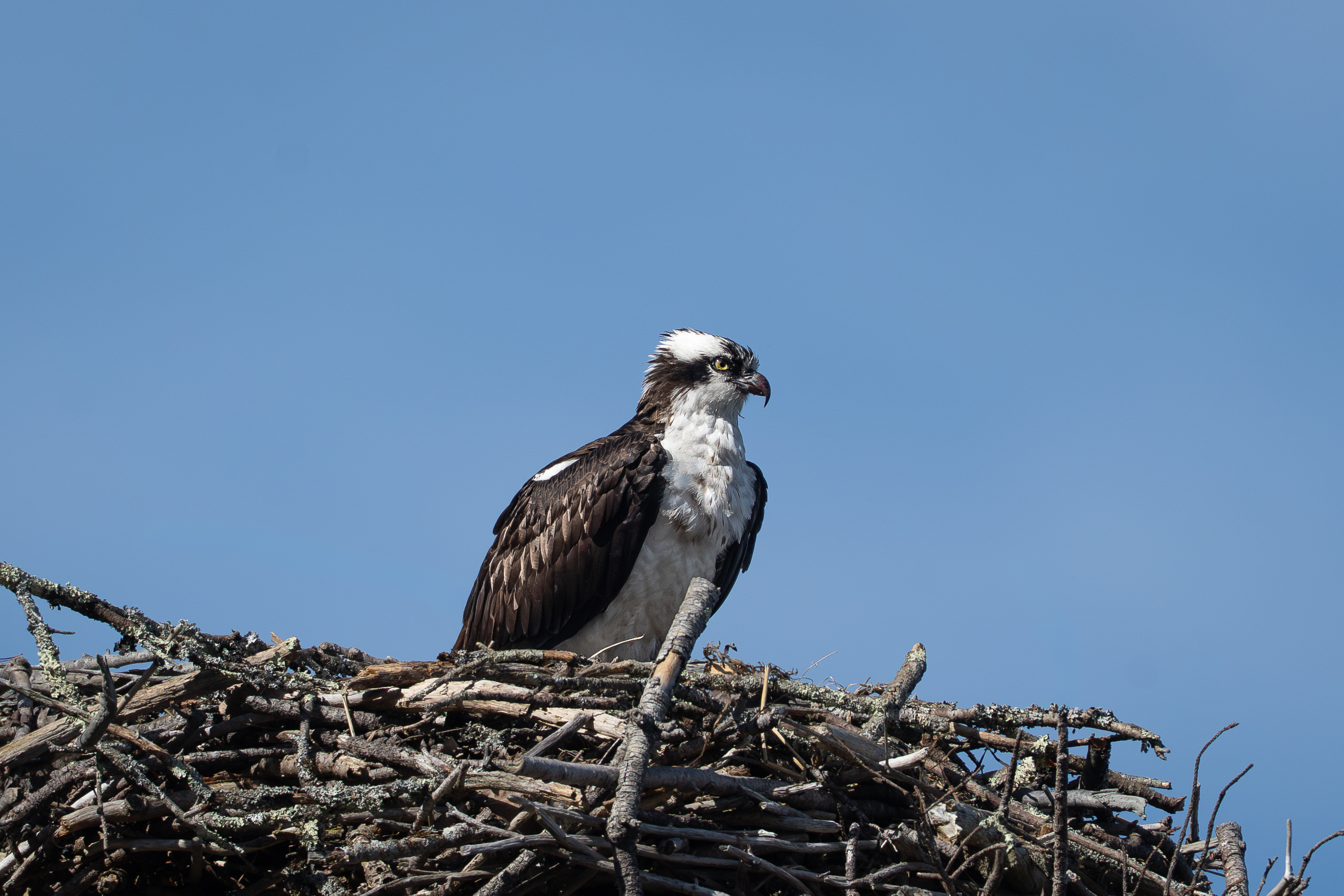
The Osprey is one of the most recognizable fishing raptors in the world — a large, long-winged bird with a distinctive crooked-arm posture in flight and a bold dark brown and white plumage pattern. The dark eye stripe running across the white head is the clearest field mark at distance, along with the characteristic hovering behavior over open water before a plunge dive.
Almost exclusively a fish eater, the Osprey has evolved a suite of physical adaptations shared by no other raptor: reversible outer toes for gripping slippery prey, dense oily plumage that sheds water rapidly, and closeable nostrils for diving. A successful hunt ends with the bird reorienting the fish head-forward in flight to reduce drag — a behavior that, once seen, is impossible to forget.
Large stick nests on elevated platforms — dead snags, channel markers, purpose-built nest poles — are reused and expanded year after year until they become massive structures. Active nest sites are excellent locations to observe sustained behavior over time. Osprey are tolerant of human activity near established nest sites, making them one of the more accessible large raptors to photograph.
Like the Bald Eagle, the Osprey suffered severe population declines across North America and Europe during the mid-20th century due to DDT-related eggshell thinning. Following the banning of DDT and targeted reintroduction programs, populations have recovered strongly across most of the range. The installation of artificial nest platforms has been a particularly effective conservation tool, enabling breeding in areas where natural nest sites are limited. Populations are now stable to increasing globally.