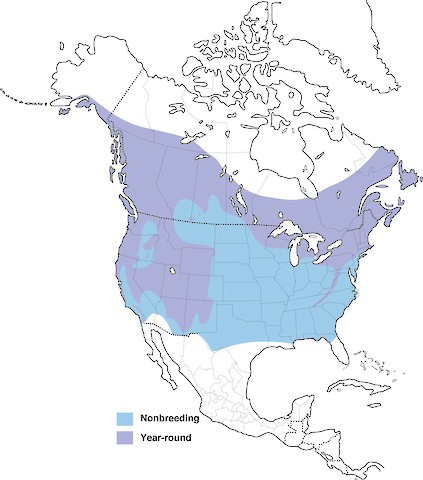
Range & Distribution
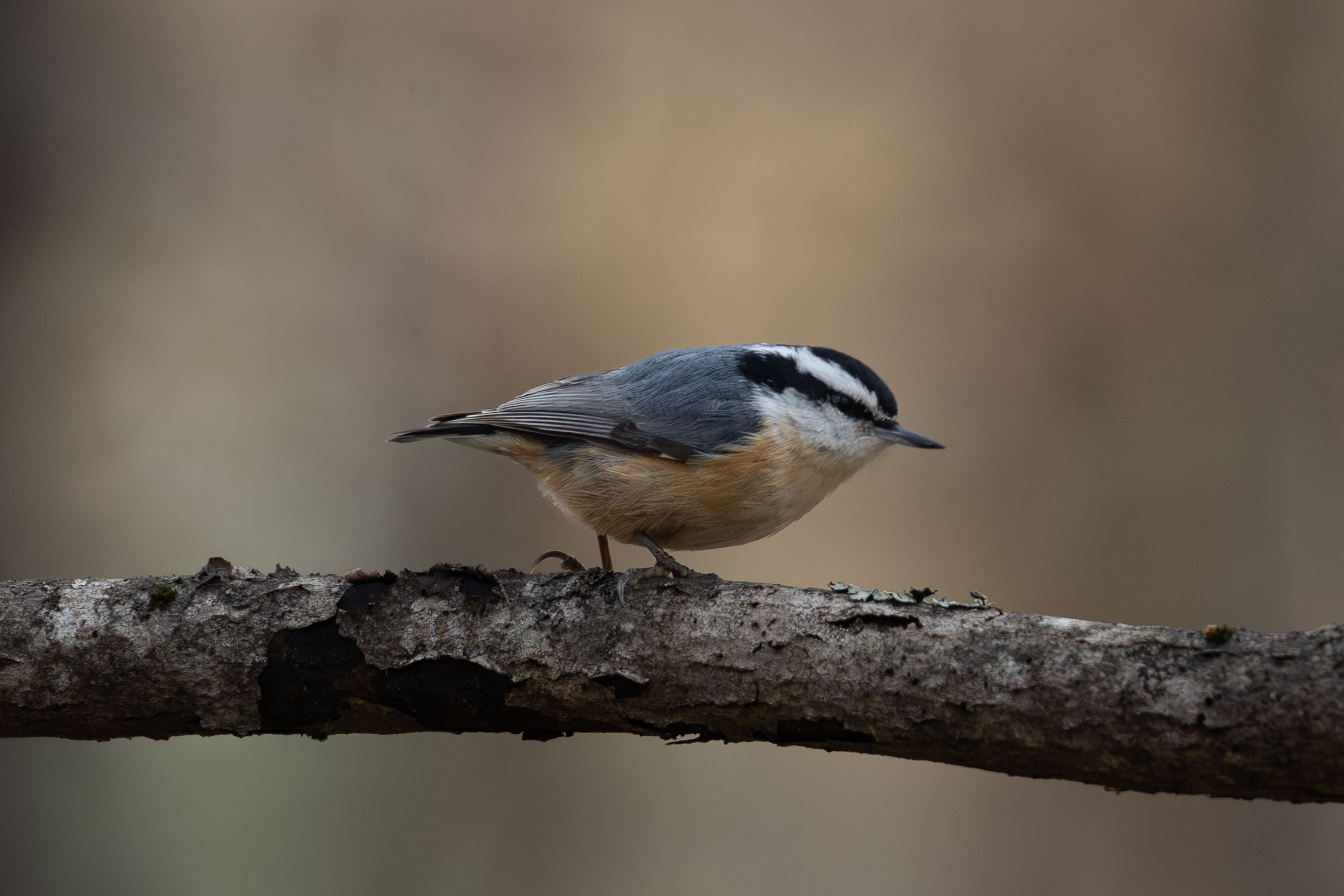
The Red-breasted Nuthatch is a tiny, compact bird of the conifers — blue-grey above and washed rusty-cinnamon below, with a black cap and, most distinctively, a black line through the eye set off by a white eyebrow. Like other nuthatches it creeps head-down on trunks and limbs, and its nasal, tin-trumpet "yank-yank" carries well through the spruce woods it favours.
It feeds on insects in summer and on conifer seeds through the colder months, wedging seeds into bark and hammering them open and caching food for winter. It excavates its own nest hole in soft dead wood and then does something remarkable — it smears sticky conifer resin around the entrance, sometimes applying it with a flake of bark, apparently to deter predators and competitors. Alone among North American nuthatches it is strongly irruptive, moving far south in years when the northern cone crop fails.
In Maine the Red-breasted Nuthatch is a common resident of spruce and mixed conifer woods and a regular visitor to feeders, especially in irruption years when numbers swell. Its constant, head-down activity on trunks is the challenge — prefocus on a stretch of clean bark or a feeder perch and wait for the bird to pause, which it does only briefly. Overcast light suits the soft blue-grey and rusty tones and keeps the white eyebrow and black eyeline crisp.
The Red-breasted Nuthatch is listed as Least Concern, secure across a large northern and montane range and adaptable enough to use feeders and to wander widely in search of food. It depends on conifer forest and on standing dead wood for its nest holes, so it is tied to the health of the boreal and mountain woods, but faces no broad threat. Its irruptions make it a welcome, if unpredictable, feeder bird far south of its breeding range.