Photo Coming Soon
Range & Distribution
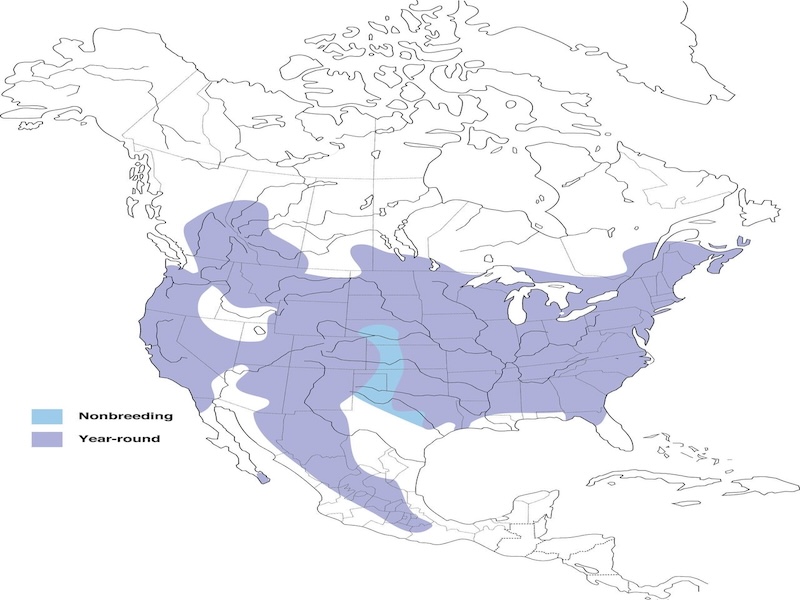
The White-breasted Nuthatch is the largest and most familiar North American nuthatch — blue-grey above and clean white on the face and underparts, with a black (or grey, in females) cap and a chestnut wash under the tail. Compact and big-headed with a short tail and a slightly upturned bill, it habitually creeps head-down on trunks and branches, a posture that identifies it at a glance.
It feeds on insects in the warmer months and on seeds and nuts in winter, and gets its name from its habit of jamming a large seed or nut into a bark crevice and hammering — "hatching" — it open with the bill. It caches food in bark for later and is a constant, confiding presence at feeders. A cavity nester, it uses natural holes, old woodpecker holes and nest boxes, the female lining the cup and the male feeding her as she incubates.
In Maine the White-breasted Nuthatch is a common, year-round resident of deciduous and mixed woods, woodlots and wooded suburbs, and one of the steadiest feeder birds through the winter. Its boldness and its head-down trunk-work bring it close and put it at workable angles — set a clean natural perch by a feeder and wait for the bird to pause, which it does between trips. The nasal "yank-yank" usually announces it before it appears.
The White-breasted Nuthatch is listed as Least Concern, common and widespread across North America and stable or increasing, comfortable in woodlots and suburbs as well as unbroken forest. It depends on mature trees and standing dead wood for the cavities it nests in, so retaining large and dead trees in woodlots supports it, but it faces no significant threat. It is among the most dependable and engaging of winter feeder birds.