Range & Distribution
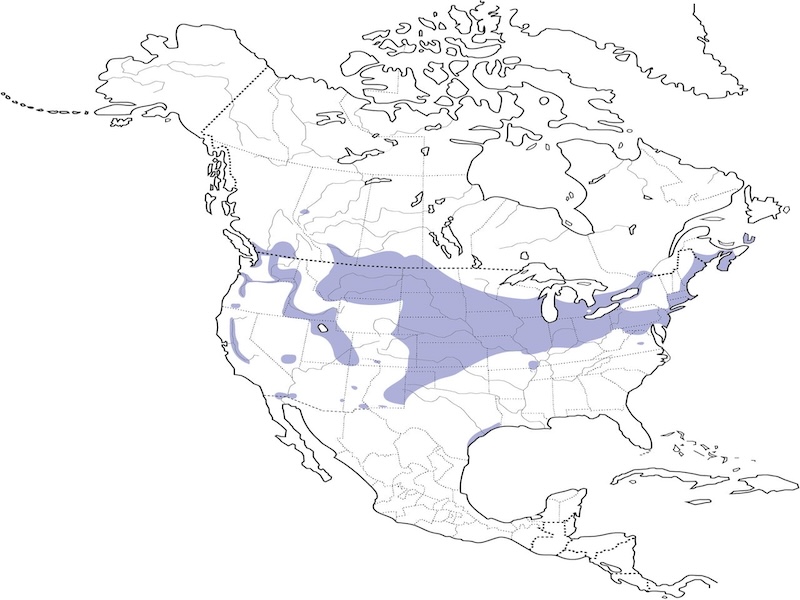
Year-round
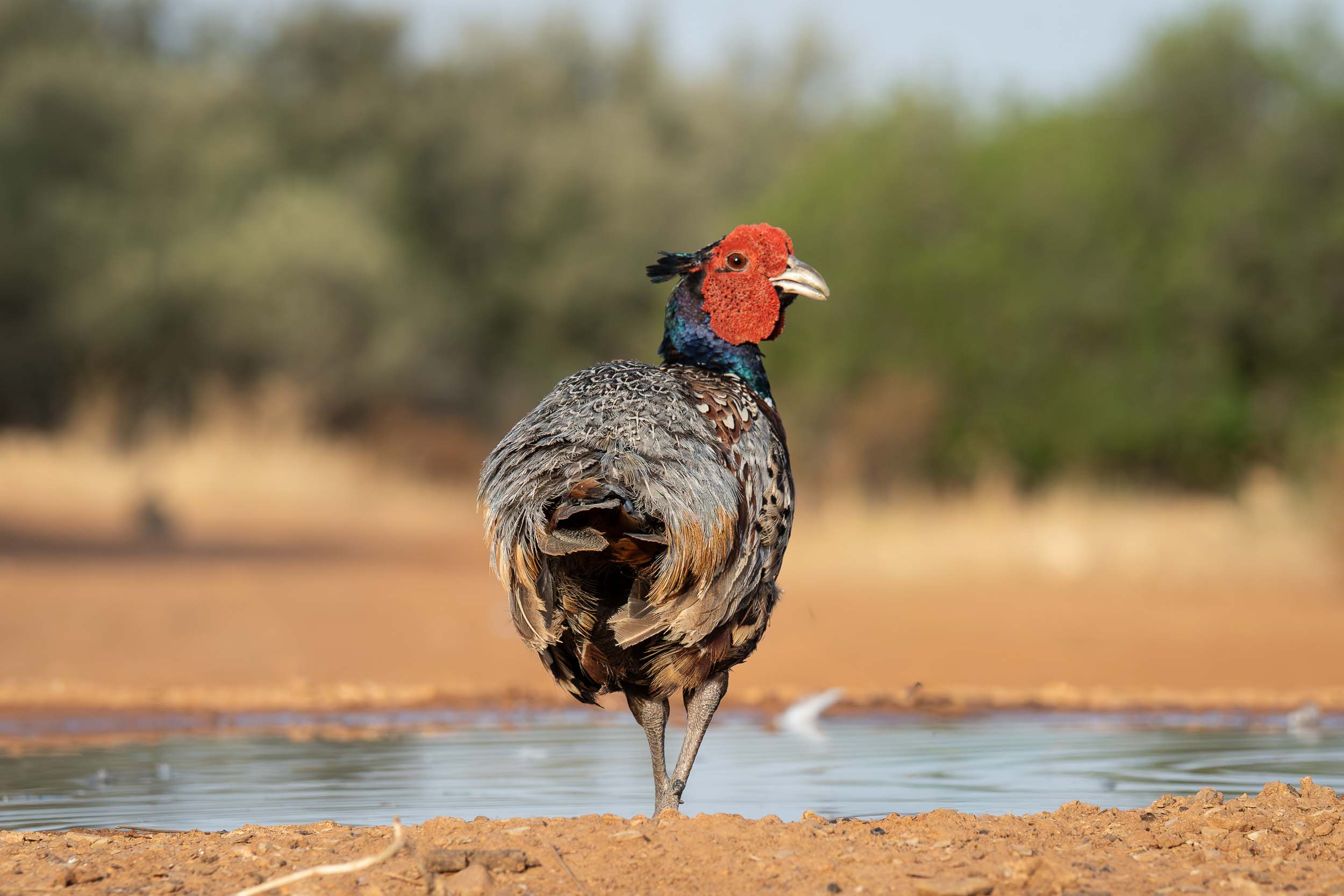
The adult male Ring-necked Pheasant is a spectacularly plumaged bird — iridescent green-purple head, red facial wattles, the white neck ring that gives the most familiar subspecies its common name, and a long graduated tail — though plumage variation across the numerous subspecies and hybrids in introduced populations is considerable. Females are warm buff-brown, heavily streaked and mottled for camouflage.
Despite being an introduced species across much of its familiar range, the pheasant has become a characteristic feature of agricultural and rural landscapes in North America and Europe. The explosive flush of a flushed bird from cover — a burst of wingbeats and an alarm call — is one of the most familiar wildlife encounters in temperate farmland and hedgerow habitats.
Males in breeding condition are most easily photographed in late winter and early spring, when displaying birds hold territories at woodland edges and field margins, crowing from exposed perches in early morning. Low morning light on the iridescent head plumage — which shifts from green to purple depending on angle — rewards close-range photography with a telephoto lens.
Native to Asia and widely introduced across North America, Europe, Australia, and New Zealand for game shooting purposes, the Ring-necked Pheasant is globally abundant and under no conservation pressure as a species. In introduced ranges, large numbers of captive-bred birds are released annually to supplement wild populations, which complicates assessment of genuinely wild population trends. Ecological impacts of mass releases on native wildlife — including competition for food and nest sites — are an area of ongoing research and debate.