Range & Distribution
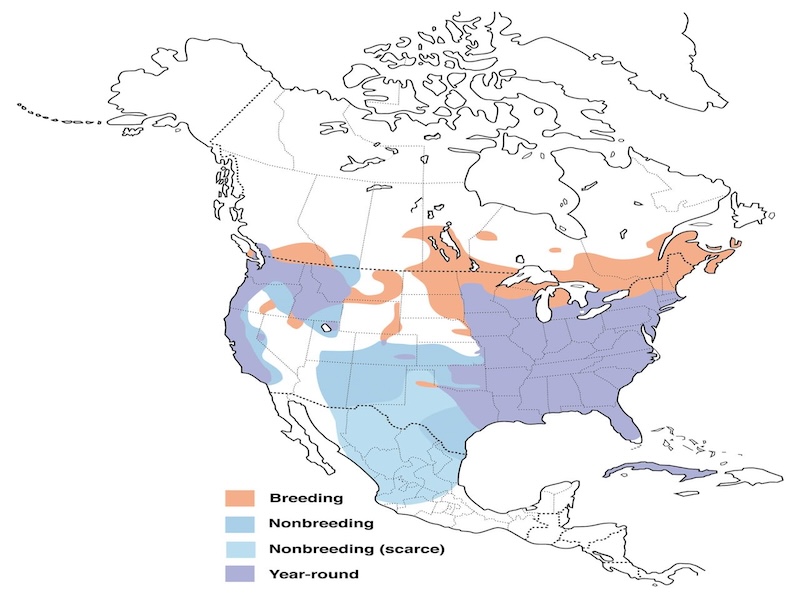
Breeding
Nonbreeding
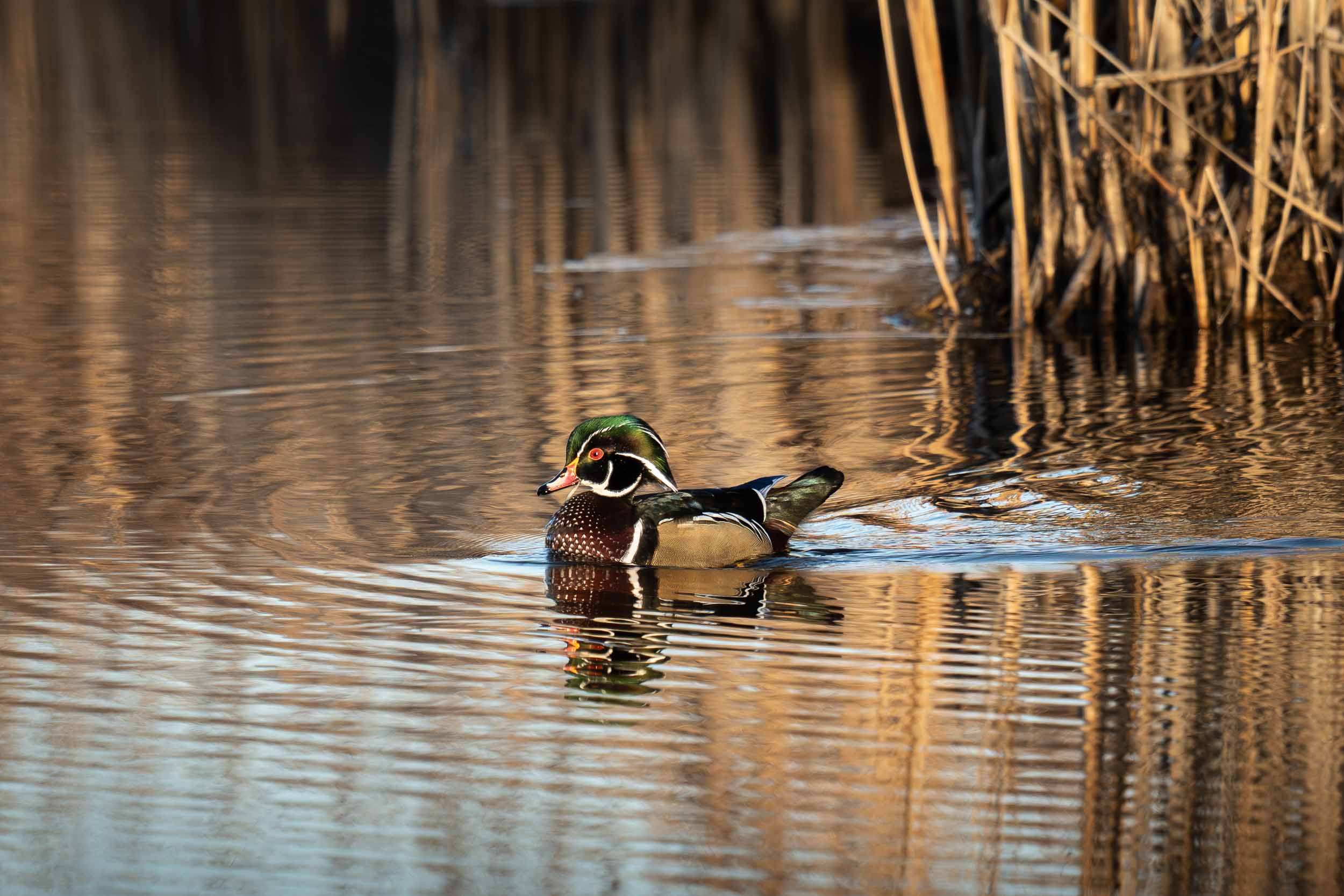
Among North American waterfowl, few species rival the Wood Duck for sheer visual impact. The adult male's iridescent green, blue and purple head, swept-back crest, chestnut breast, and intricately patterned flanks make it immediately recognizable — and a constant challenge to photograph in a way that does the plumage justice. Overcast light tends to render the iridescence more faithfully than direct sun.
Their habitat tends to be wooded wetlands and beaver ponds edged with mature forest. Unlike most ducks, Wood Ducks are equally at home perched in trees as they are on the water — a consequence of nesting in tree cavities above the ground. The cavities they nest in can range from 1.5 to 18 meters off the ground, with an average nesting height of about 7.5 meters. Newly hatched ducklings leap from the nest cavity within 24 hours of hatching.
Dawn is the most productive time to work this species. Birds move from roosting areas to feeding wetlands shortly after first light, and the low-angle morning light catches the male's plumage at its best. Slow paddling in a canoe or kayak through sheltered backwater areas is often more productive than static bank watching.
Once nearly hunted to extinction in the early 20th century, the Wood Duck rebounded dramatically following the Migratory Bird Treaty Act of 1918 and widespread nest box programs. It stands as one of North America's great waterfowl conservation successes. Populations are now stable and increasing across most of the range. Continued availability of mature forest with suitable cavity trees and clean freshwater wetlands remains essential to long-term population health.